
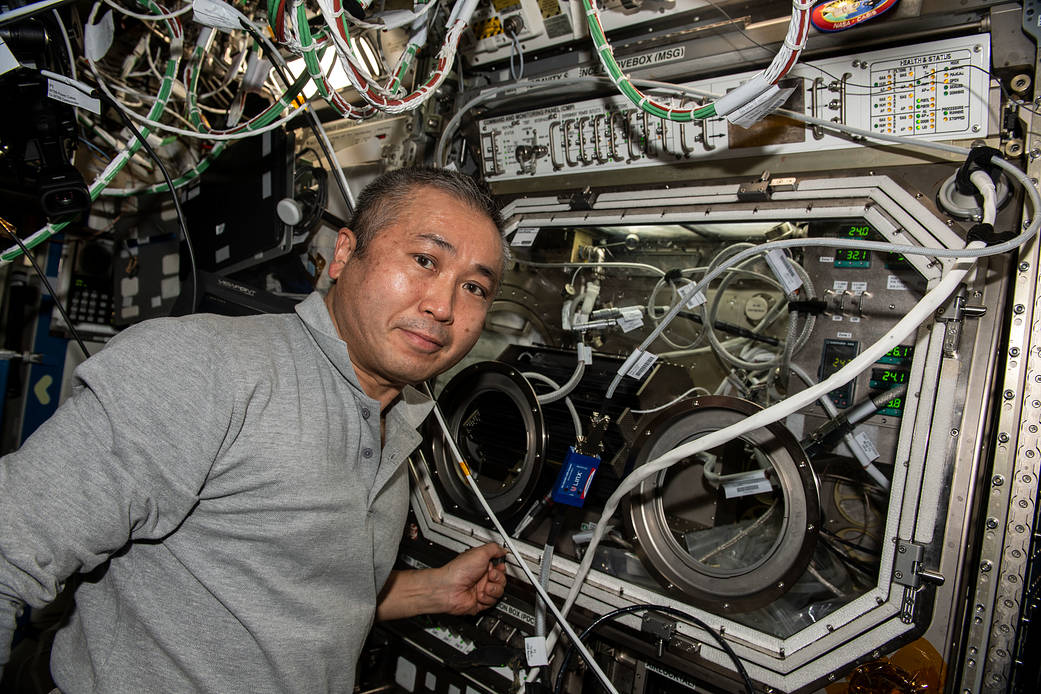
When Koichi Wakata left the Japan Aerospace Exploration Agency (JAXA) in March 2024, he became the highest-profile astronaut to join the private sector, quickly assuming the role of Chief Technology Officer at Axiom Space Japan. This move came just as Axiom, a Texas-based company aiming to build the first commercial private space station, announced ambitious plans to deepen partnerships across the Asia-Pacific region, with a wholly owned subsidiary in Tokyo established on July 1, 2026.
Axiom Space is positioning its Japanese arm to strengthen ties with government, industry, and academic partners, an initiative now under the technical leadership of Wakata. The company has emphasized Japan as both a regional innovation hub and a stepping stone to wider engagement with Southeast Asia. Although Axiom’s core efforts target Japan, opportunities for ASEAN involvement are growing. Wakata has been instrumental in opening dialogue with business leaders throughout the region, exploring how space research and in-orbit manufacturing could benefit ASEAN economies.
Forging Industrial Alliances for Microgravity Manufacturing
On October 1, 2025, Axiom Space and Japan’s Resonac Corporation signed a memorandum of understanding to explore semiconductor manufacturing in microgravity. The partnership seeks to leverage the unique properties of low Earth orbit to create next-generation chips—a proposition that could give regional manufacturers a critical edge. Details remain in flux, with initial research and prototype production slated well ahead of Axiom’s own space station’s planned first module docking at the International Space Station in 2028. While the current MOU is bilateral, industry analysts point to potential knock-on effects for suppliers and startups across Asia, including those in ASEAN countries where electronics and component production are central to economic growth.
Expanding Regional Access to Space
Wakata’s advocacy for deeper international cooperation was clear at the March 27, 2026 KAIST Space Bio Workshop in South Korea, where he spoke about the path toward human missions to the Moon and Mars and the need for global participation. Axiom’s public engagement with ASEAN business leaders suggests the company is aiming to foster a broader Asia-Pacific space ecosystem, where knowledge transfer and joint projects could help democratize access to space-based manufacturing and research infrastructure. With regional governments and universities expressing growing interest in microgravity science, these early-stage conversations may lay the groundwork for future collaborations.
Still, the extent to which Axiom’s recent moves will translate into direct opportunities for ASEAN nations remains an open question. Company statements and presentations have largely focused on Japan as the initial gateway, and concrete multi-party projects have yet to be detailed. However, the symbolism of a veteran Japanese astronaut at the helm of Axiom’s regional expansion has not gone unnoticed, underscoring Japan’s status as a bridge between global commercial space enterprises and Southeast Asia’s emerging space ambitions.
What Comes Next?
As construction and partnership efforts ramp up toward the late-2020s launch of Axiom’s first orbital module, attention is likely to focus increasingly on how these new facilities will be used—and by whom. Regional space actors, especially within ASEAN, will be closely monitoring the development of partnerships and pilot projects, with the hope that access to commercial space infrastructure can boost scientific research and local manufacturing capabilities. For now, Koichi Wakata and Axiom Space Japan are at the center of a rapidly evolving landscape, with the promise, but not yet the particulars, of a more inclusive Asia-Pacific space future.