
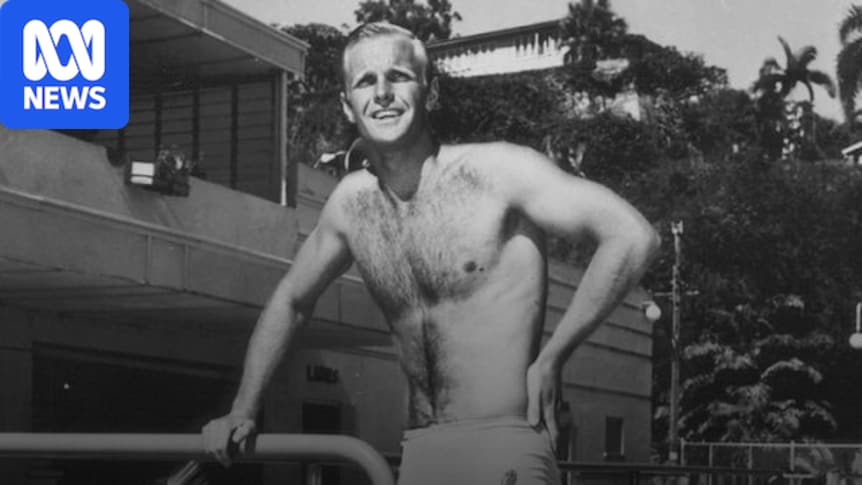
Jon Henricks, the celebrated Australian swimmer whose record-shattering Olympic feats in the 1950s cemented his place in sports history, has died at his home in Santa Barbara, California. He was 91. Henricks’s death was confirmed on November 21, 2026, though the precise cause has not yet been made public.
Born in Sydney on June 6, 1935, Henricks became a household name after the 1956 Melbourne Olympics, where he powered to gold in the 100 meters freestyle before anchoring Australia’s 4×200 meters relay team to another world-best gold. His remarkable speed—he once held the 100 meters freestyle world record for five years, slashing nearly two seconds off its previous mark—transformed the standard for sprinters worldwide and marked Australia’s ascension as a force in international swimming.
Henricks’s emergence followed years of success both in and out of the pool. After claiming three gold medals in freestyle events at the 1954 Commonwealth Games and dominating at the 1958 American Nationals, he continued to break boundaries throughout his career. Under the guidance of coach Harry Gallagher, Henricks pioneered innovations such as pre-event tapering—helping swimmers peak at the right moment—and was credited as the first major swimmer to shave his body to reduce drag, habits now common at the elite level.
His athletic achievements were recognized globally, earning him induction into the International Swimming Hall of Fame in 1973, the Sport Australia Hall of Fame in 1986, and the Order of Australia Medal in 2018. Outside the pool, Henricks attended the University of Southern California and married Bonnie Wilkie in 1960, weaving his life between Australia and the United States.
Henricks’s passing has prompted tributes from across the swimming world, with many remembering him as a link to a transformative era in Australian sporting identity. The status of further memorials or official commemorations has not yet been announced by sports governing bodies.
As the details of his final days remain private, Henricks’s story continues to inspire. His daring approach and relentless pursuit of perfection altered the landscape of his sport, setting standards that endure today.