
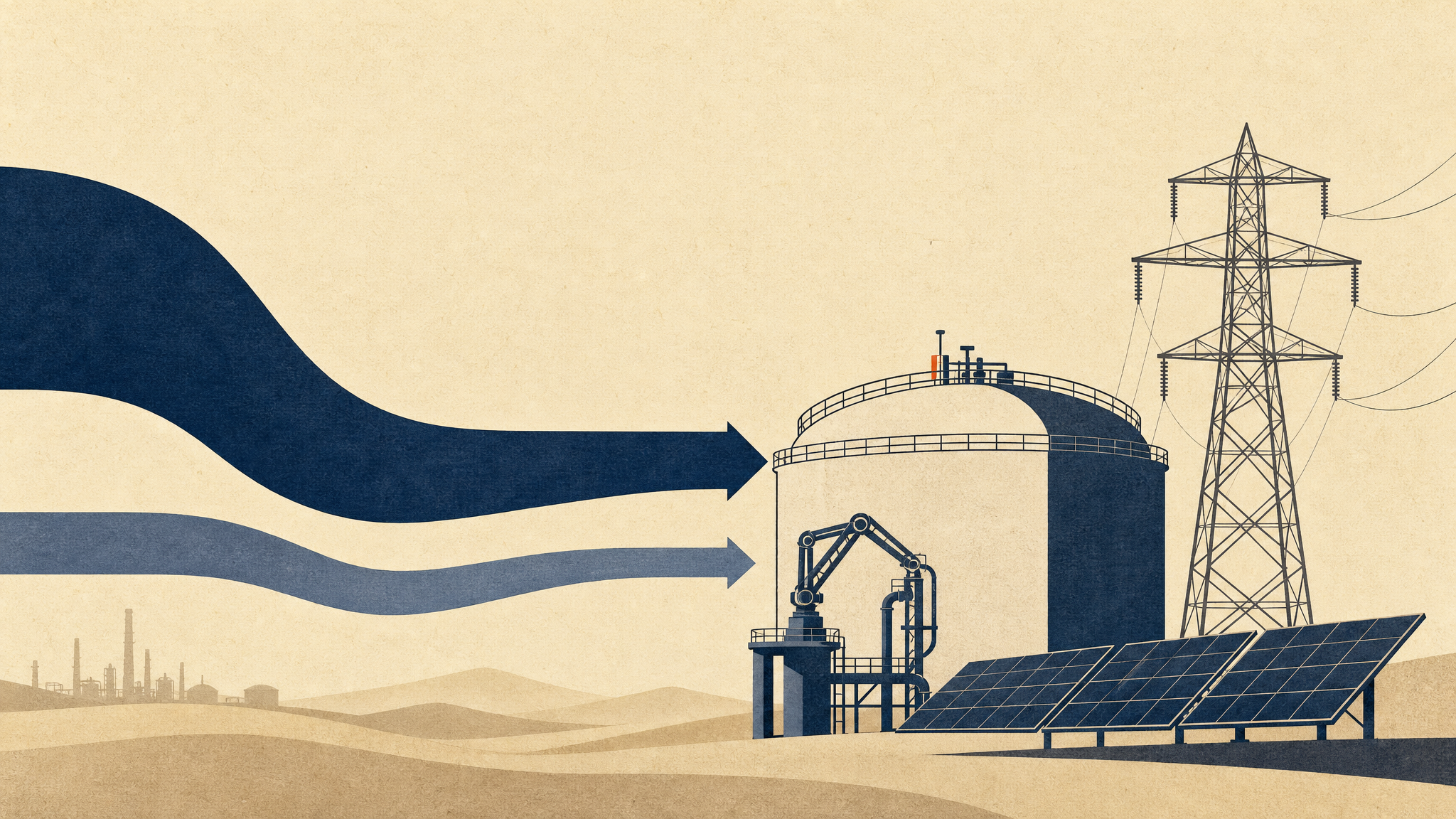
The Abu Dhabi National Oil Company (ADNOC) has secured approximately $1 billion in green financing from the Japan Bank for International Cooperation (JBIC) to push forward decarbonization efforts in its liquefied natural gas (LNG) operations and to strengthen clean electricity transmission across the United Arab Emirates (UAE). The agreements, finalized on November 2, 2026, mark a new phase of international partnership as the Gulf state accelerates its transition toward renewable and low-carbon energy sources.
According to the official statement by JBIC, the financing consists of two project loan agreements: one focused on lowering the carbon intensity of ADNOC’s LNG production and sales, and the other supporting grid transmission lines to distribute solar and nuclear power throughout the UAE. JBIC’s commitment is split between a roughly $543 million share of a larger $905 million loan backed by co-lenders MUFG Bank, Mizuho Bank, and HSBC’s Tokyo Branch, plus an additional $58 million share of a $97 million package with Mizuho and HSBC. In total, JBIC is providing about $601 million from the full $1.002 billion in co-financed loans.
This fresh financing builds on an earlier $3 billion green loan arrangement between ADNOC and JBIC in July 2024—the Emirati company’s first large-scale foray into green finance. Both sides have described the latest loans as part of JBIC’s “GREEN operations,” designed to fuse economic development with environmental responsibility.
The projects receiving funding have two main objectives. First, ADNOC aims to reduce the environmental impact of its globally significant LNG business, a step in line with its pledge to achieve net-zero emissions by 2045. In parallel, the company will expand infrastructure to channel power from solar, nuclear, and other renewables into the national grid, underpinning the UAE’s growing non-fossil energy capacity.
This agreement also ties into Japan’s broader energy security strategy. Under the “Partnership on Wide Energy and Resources Resilience Asia (POWERR Asia)” initiative launched earlier in 2026, Japan is seeking to shore up reliable energy supply chains with strategic Asian partners, among whom Abu Dhabi stands out for its renewable potential and carbon storage geology.
While neither JBIC nor ADNOC has disclosed the detailed lineup of projects funded by these loans, both institutions said further information would arrive as implementation proceeds. There are currently no reported delays or disputes over the funding’s rollout, and the projects are expected to contribute materially to regional decarbonization and energy diversification goals.
The arrangement, viewed as a significant milestone by both parties, will be tracked closely by stakeholders looking for substantive results in regional energy transition and international green finance cooperation.