
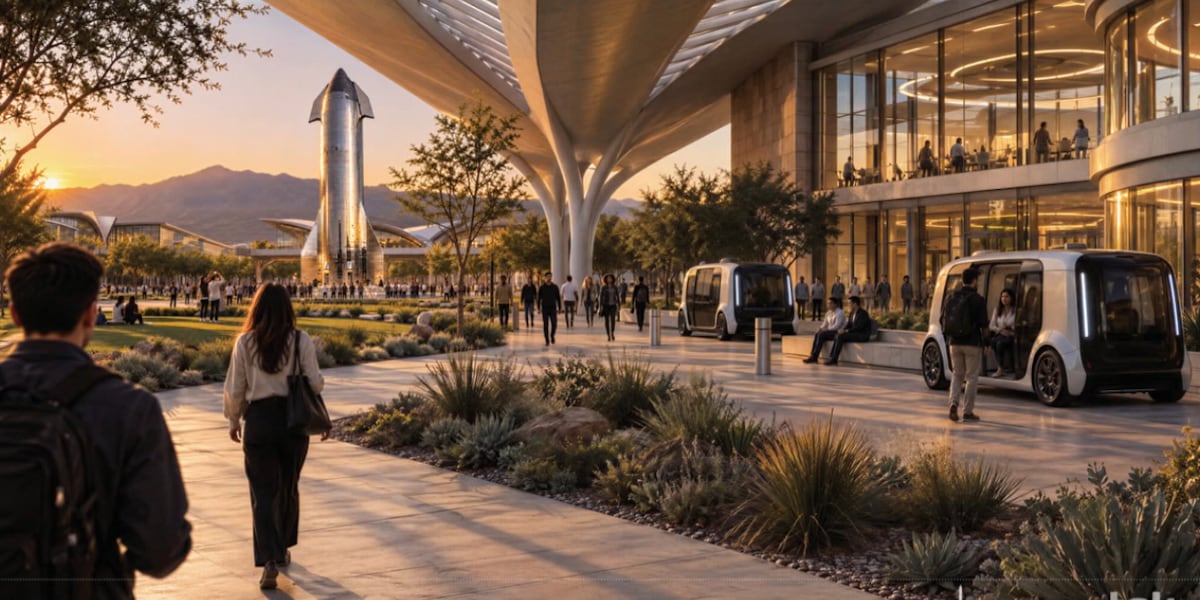
Nevada has stepped to the forefront of a high-stakes national contest by formally proposing to host the United States Space Academy, a new federal institution created by presidential order this summer. With a plan to develop a sprawling campus east of Reno and strong backing from state leaders, Nevada is making a play to become the home for training the nation’s next generation of space professionals. But with at least ten other states in pursuit, the race remains wide open.
The state’s bid, coordinated by the Governor’s Office of Economic Development and the Nevada Space Academy Coalition led by Selene Industries, proposes a main 45,000-acre site along Interstate 80 in Lyon and Churchill counties. The project would include a dedicated 8,000-acre campus as well as specialized facilities for launch and vehicle testing. Planners have also identified fallback locations in southern Nevada should the preferred northern site not advance.
The push for the academy originates with an executive order signed by President Donald Trump on August 28, 2026, establishing a national institution to “strengthen the nation’s space workforce and develop the next generation of space leaders.” As outlined in the order, the academy’s mission will be to train military, NASA, and civilian candidates to serve in a rapidly growing aerospace sector. Selection of a location is being overseen by a presidential commission chaired by NASA Administrator Jared Isaacman, with a final report on the bid process expected by the end of December.
Key to Nevada’s proposal is its deep inventory of federal land and its established infrastructure for space and military operations. In a bipartisan letter to NASA Administrator Isaacman, Nevada’s congressional delegation emphasized the state’s unique advantages: extensive federal training and test ranges, over 2.9 million acres of specialized airspace, active lunar training grounds, and the historic use of Nevada’s terrain for astronaut preparation—even Apollo crews trained at the Nevada National Security Site. The letter, spearheaded by Congresswoman Susie Lee and signed by Senators Catherine Cortez Masto and Jacky Rosen among others, also cited the state’s robust research universities and a rapidly growing aerospace workforce, which expanded by more than 50% over the past decade.
However, Nevada faces stiff competition. States including Maryland, Virginia, Pennsylvania, Louisiana, Alabama, Arizona, Colorado, Florida, Tennessee, and Texas have also submitted detailed bids, each positioning their own scientific communities and facilities as prime locations. Colorado, for example, touts its existing space industry hub in Colorado Springs and proposed incentives package. NASA and the presidential commission have not commented publicly on frontrunners or indicated which factors will weigh most heavily in their final decision.
The current timeline envisions a decision by late December, with construction on the new academy slated for 2027 and the inaugural class of 300 students beginning coursework—potentially at interim facilities—by fall 2028. Until a decision is reached, Nevada officials and industry leaders intend to keep up their campaign, arguing that the region’s space legacy and federal assets make it uniquely suited for a venture with such national significance.