
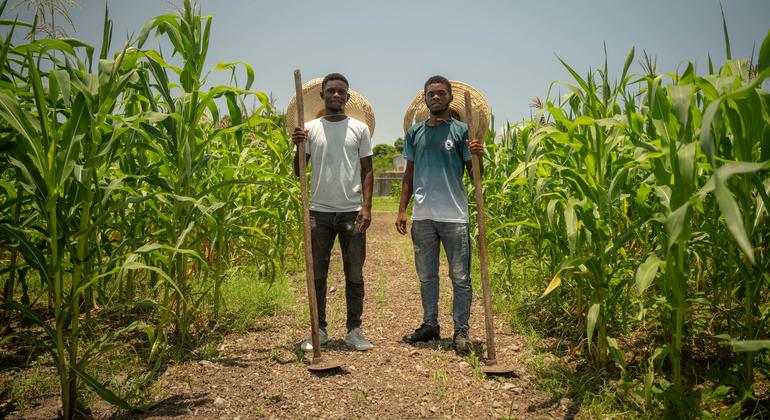
On drought-parched hillsides and in villages emptied by violence, Haiti’s farmers are struggling against a convergence of disasters that threaten the nation’s ability to feed itself. As armed gangs force more than 1.5 million people from their homes and El Niño brings both droughts and floods, livelihoods once sustained by agriculture are collapsing across the country.
United Nations figures reveal the depth of the crisis: from March to June 2027, an estimated 6.35 million Haitians—half the population—are projected to face insufficient food, with nearly two million enduring emergency conditions, barely able to survive without selling the few assets they have left. The World Food Programme (WFP) and the Food and Agriculture Organization (FAO) record that harvests have withered and livestock has succumbed to disease and neglect, leaving entire families with little but uncertainty—and hunger.
Local farmers describe a desperate cycle. “Rain isn’t falling,” explained Dieula Célestin. “You work the soil, but there is no rain. You plant your crops, and you end up with nothing to harvest.” For others, insecurity has extinguished the means of raising livestock or selling produce, compounding the loss with each new upheaval. Displacement and fear have hollowed out markets and left basic food transport routes exposed to violence.
The El Niño phenomenon only intensifies these vulnerabilities. The number facing drought conditions alone is expected to reach four million by December 2026, with many unable to plant or harvest at all amid swings from arid spells to sudden flooding. Climate shocks have become a multiplying force, leaving humanitarian organizations to confront not just immediate disaster, but an entrenched emergency perpetuated by instability.
The humanitarian response is both immediate and forward-looking. WFP, working alongside Haitian authorities, reports delivering emergency rations and cash to 2.6 million people and providing daily school meals to 620,000 students. The UN’s Humanitarian Air Service (UNHAS) shuttles aid workers and vital supplies past impassable roads and gang-held neighborhoods, while pre-positioned stocks are used to meet surges in need, as seen after Hurricane Melissa one year ago.
To break the cycle, agencies such as FAO and the International Fund for Agricultural Development (IFAD) are investing in resilience: distributing livestock like goats and poultry that bring immediate income, rehabilitating water infrastructure, and providing crop insurance. Over seventy percent of food for WFP school meals now comes directly from local farmers, laying groundwork for a future beyond dependency.
Yet the tension persists: food aid keeps people alive today, but as WFP’s acting country director notes, only long-term investment will give Haitians the resilience to withstand the next shock—be it another season of drought, escalation of violence, or a new storm system. For now, the unanswered question remains whether coordinated humanitarian efforts can outpace the churn of crises and help Haiti’s farmers rebuild their shattered livelihoods.