
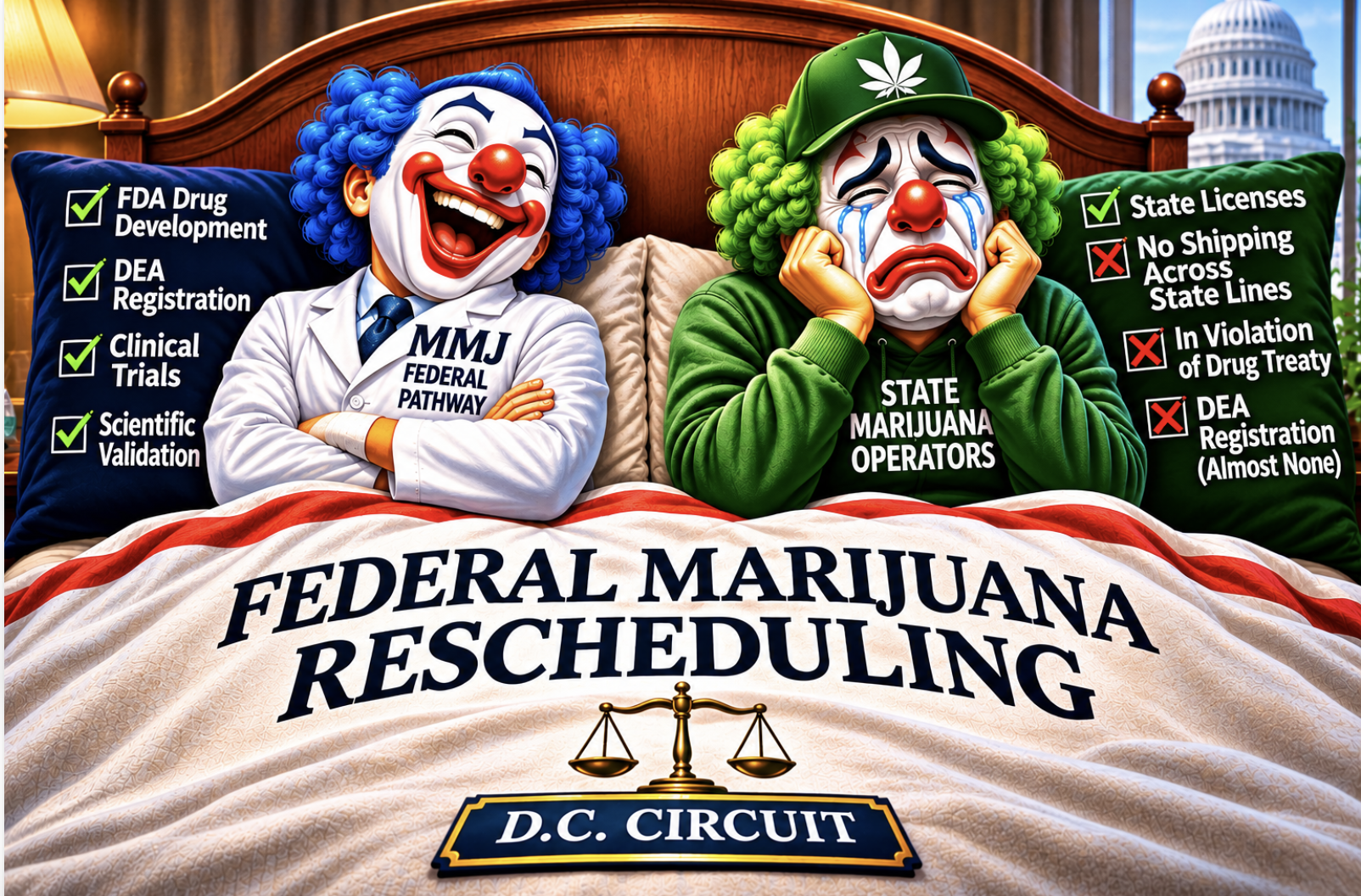
The seismic shift in U.S. federal drug policy this year—moving certain marijuana products from Schedule I to Schedule III and launching a new DEA registration pathway—has triggered an unusual array of lawsuits and drawn scrutiny over the resilience of state regulation.
Challenging the Rulebook
At the heart of the legal storm is Attorney General Order No. 6754-2026. Enacted in April, it allows FDA-approved and state-licensed medical marijuana products onto Schedule III of the Controlled Substances Act, a move intended to recognize their medical utility and ease business for operators. In tandem, the DEA activated an expedited process allowing state-licensed entities to apply for federal registration.
MMJ International Holdings, a company developing cannabinoid-based therapies, is seeking to overturn the order in the U.S. Court of Appeals for the D.C. Circuit. Their lawsuit claims the rescheduling exceeded the Justice Department’s statutory authority and violated federal procedural law.
State Operators Mobilize
Meanwhile, an alliance of state-licensed medical marijuana businesses—including Standard Wellness Utah, Verde Americano (Arizona), and NW Confections OK—has asked the court to halt DEA guidelines slated to take effect November 29, 2026. These operators argue that the new federal restrictions could disrupt their supply chains and cripple trade among those not yet federally registered.
Courts Refuse to Block or Expand Challenge
On September 9, 2026, the D.C. Circuit denied a request to put the rescheduling order on hold, keeping marijuana’s Schedule III status in place while legal battles continue. The court also denied two other companies’ motions—MedPharm Iowa and Tri-Mountain Pure—to be formally joined as parties, permitting them only to offer friend-of-the-court briefs (amicus curiae).
Oversight in Question
The federal government and the Justice Department have justified rapid licensing and registration partly on the assumption that state-run medical marijuana systems offer strong safeguards against drug diversion and abuse. However, this premise has drawn fire from Oklahoma officials, who describe serious gaps in state oversight, including widespread diversion and enforcement failures in their burgeoning medical marijuana market. While these concerns have not been independently verified, they add weight to opponents’ arguments that the federal order is premature or insufficiently scrutinized.
What Comes Next?
The D.C. Circuit has consolidated the ongoing cases but has yet to rule on the underlying legality of the rescheduling and registration program, leaving businesses across the country in limbo. Unresolved are whether the Justice Department’s process satisfies statutory and procedural requirements, and whether state-run programs are equipped to meet federal expectations for public safety and diversion control.
As the legal battles drag on and with further legislative action possible, the fate of the new federal marijuana framework—and the operations of thousands of state-licensed businesses—remains uncertain.