
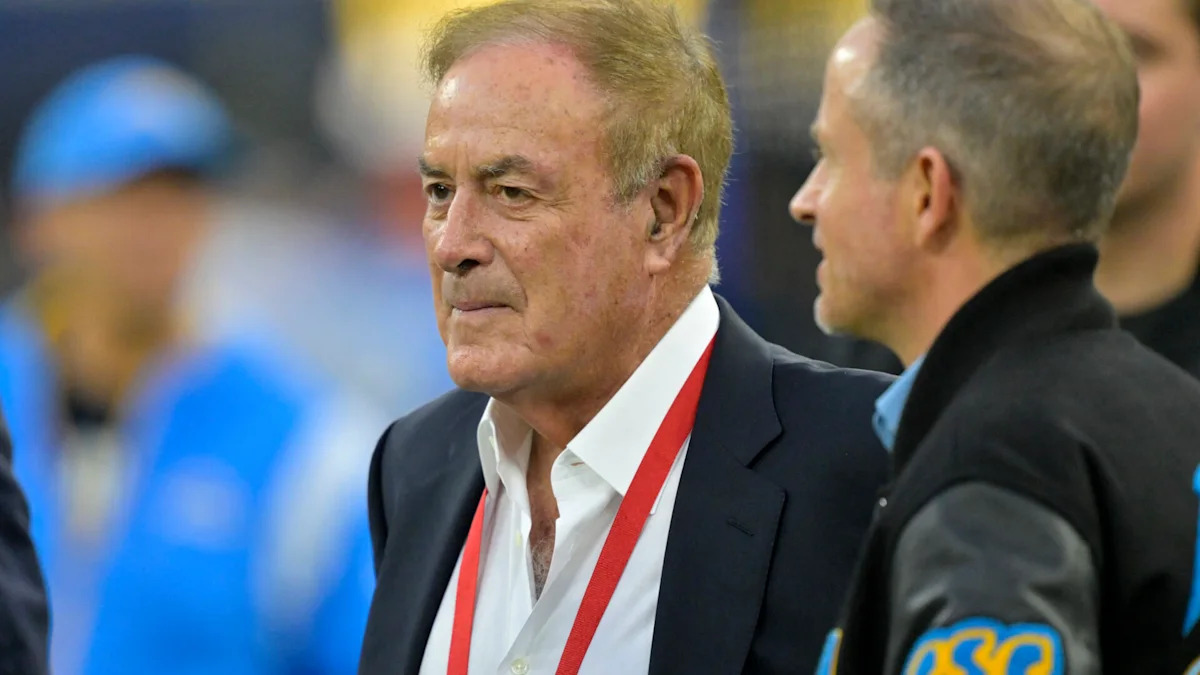
Al Michaels, widely regarded as one of American sports broadcasting’s legendary voices, became the subject of widespread fan criticism following his performance during the Thursday Night Football matchup between the Houston Texans and the Indianapolis Colts on November 19, 2026. In a game characterized by a decisive Houston win (26–3), Michaels’ notably understated call of a dramatic blocked field goal drew attention—and indignation—across social media and sports news platforms.
The incident unfolded in the second quarter at Houston’s NRG Stadium, when Texans defensive lineman Logan Hall blocked a 62-yard attempt by Colts kicker Spencer Shrader. Instead of an exuberant, high-energy call, Michaels simply stated, “So the kick is on the way and… blocked,” in a flat tone. Many viewers took to platforms like Twitter (now X), expressing disappointment over the lack of excitement, with one commenting on Yahoo Sports coverage: “Literal goosebumps from the amount of excitement coming from Al Michaels announcing this blocked field goal.” (Yahoo Sports)
This is not the first time Michaels’ approach has been questioned. Just a week earlier, during a New York Giants–Washington Commanders broadcast, fans made similar complaints about his reaction to a highlight-reel defensive play. As these critiques multiply, the conversation has broadened to whether the expectations for broadcast energy have outpaced the style that cemented Michaels’ reputation over decades—including his iconic “Miracle on Ice” call during the 1980 Winter Olympics and numerous Super Bowls.
At age 82, Michaels remains active on primetime football broadcasts, a rarity among sports commentators. Some fans have called for him to “hang it up” or share responsibilities with a broadcaster whose style matches evolving audience appetite for animated, passionate game coverage. Others have defended Michaels, attributing his restrained delivery to the lopsided score and sluggish pace of this particular contest. These defenses, however, are less prominent amid the criticism.
As of Saturday, there has been no public response from Michaels or his representatives concerning the incident. The NFL and Thursday Night Football’s production team have not addressed whether the ongoing discourse might lead to any changes in the commentary lineup or tone for future games.
The broader discussion underscores shifting attitudes in sports viewership, as legacy broadcasters increasingly find themselves navigating new standards—and scrutiny—regarding engagement and enthusiasm on air. For Michaels, whose voice has been woven into the fabric of professional sports for over five decades, the current criticism poses questions about how veteran broadcasters adapt to the expectations of digital-age audiences.